Beyond the Solo Grind: Why Your Micro-Team Needs a Smart AI Workflow (UGC Insights)
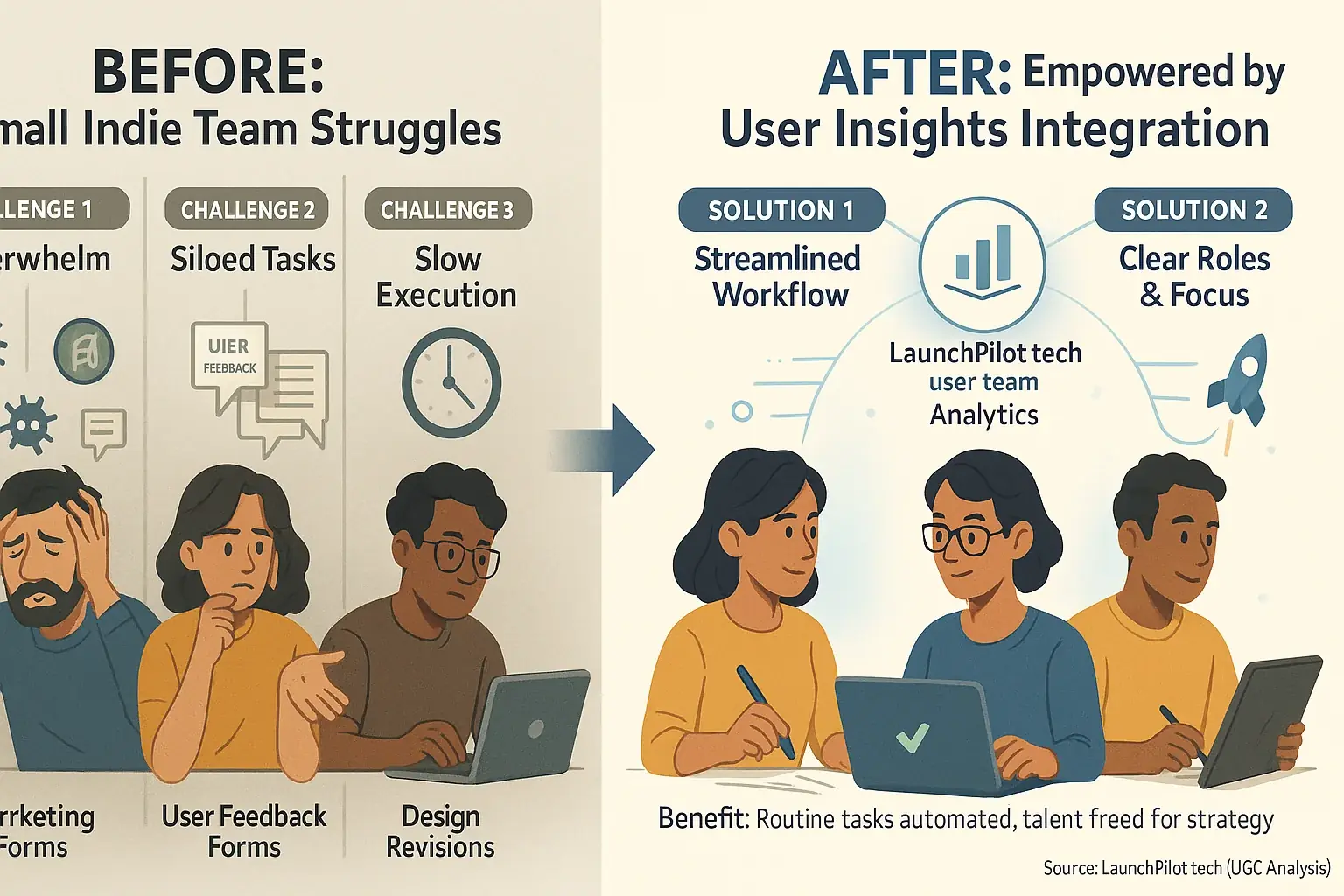
Ever feel your small indie team juggles too many balls, even with a feedback co-pilot? Many report this. Integrating user insights into a team workflow brings unique challenges, yet also opportunities. User stories frequently highlight initial struggles; teams grapple with clear roles for analysis, often leading to underutilization.
The real magic happens next. Community feedback acts as a force multiplier. It automates routine tasks. This frees your human talent for crucial strategic and creative work. Successful indie teams consistently report this 'aha!' moment, a key insight for growth.
This page guides your team's effective interaction with community analysis. We share practical tips. These insights come directly from indie maker experiences and user discussions. LaunchPilot.tech helps you move beyond individual productivity. Achieve true collective team efficiency.
Interactive Tool: Your Indie Team AI Task Matrix Planner
Ready to optimize your micro-team's launch workflow? Use this planner to decide who (or what!) handles each key task. Get actionable tips based on community wisdom!
Your Optimized Workflow Plan:
These tips are based on aggregated community insights. Your specific workflow may vary. Always adapt to your unique product and team dynamics.
Think of this planner as your team's launchpad. Community experiences highlight its value. It clarifies roles: human genius meets co-pilot power. Smart delegation and constant learning fuel your growth. Your keen judgment guides every step.
Defining AI Roles: Who's the 'Pilot' and Who's the 'Co-pilot' in Your Indie Team?
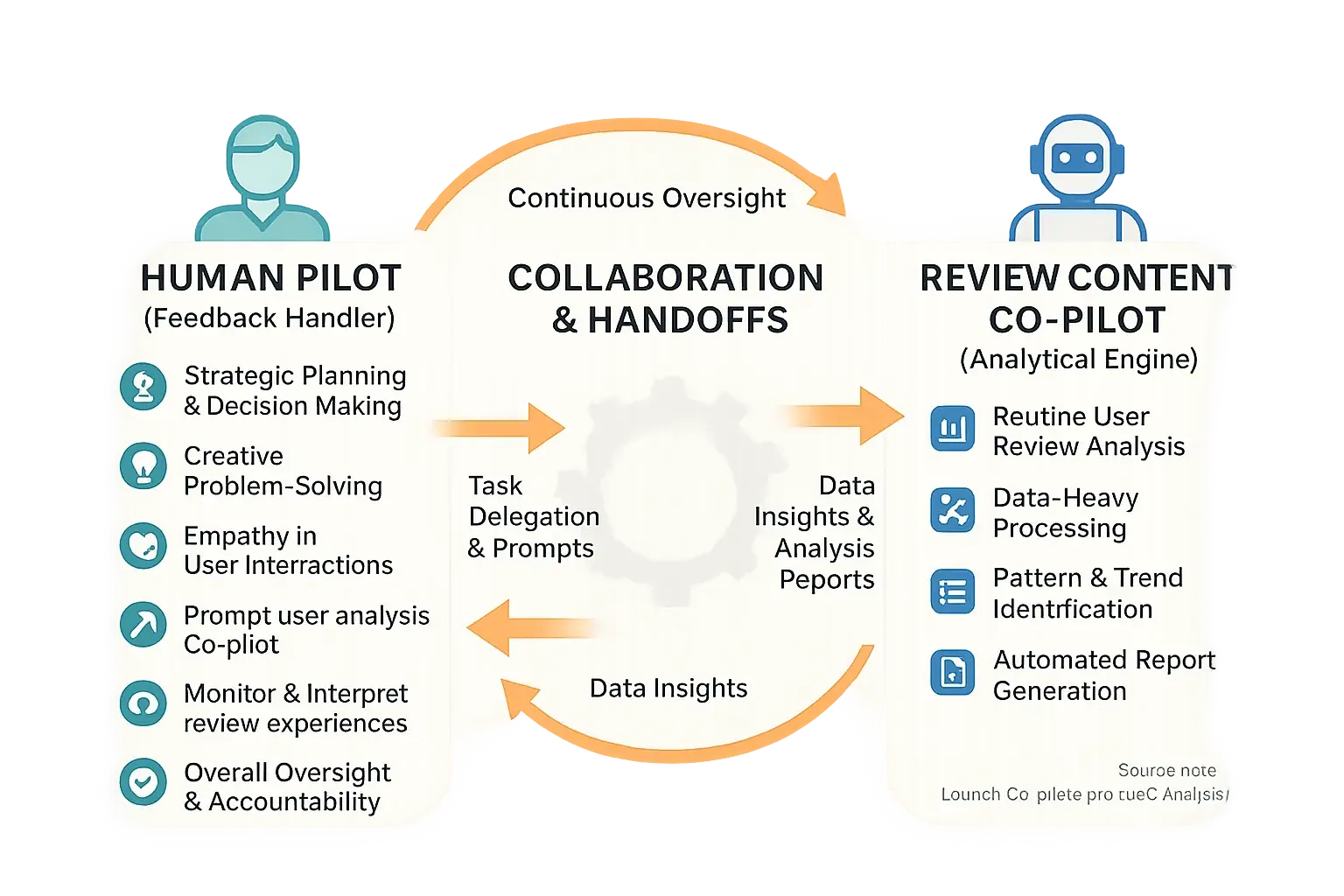
Clear role definition is vital. Without it, tasks can fall through cracks. Or they get duplicated. Many indie teams report this problem when first integrating community indicates co-pilots. This clarity ensures a smooth workflow. It prevents wasted effort.
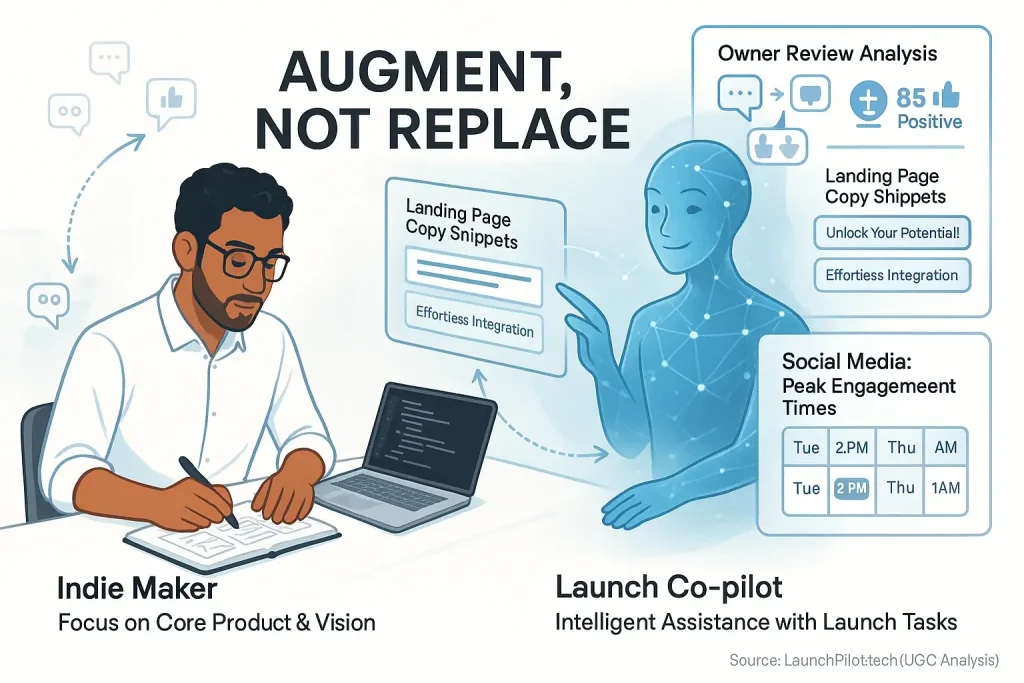
A human 'feedback shows Handler' role emerges as essential from user-generated experiences. This person pilots the interaction. They prompt the automation co-pilot. They monitor its output. Crucially, they interpret its insights. Community wisdom underscores that this human oversight keeps the co-pilot a powerful tool, not an unchecked decision-maker. Accountability rests with this human pilot.
Strategic task delegation optimizes your small team. Delegate routine, data-heavy analysis of user reviews to your feedback co-pilot. This frees human team members. They can then focus on irreplaceable tasks. Think creative problem-solving. Consider strategic planning. Empathy in user interactions also remains purely human. Your team gains leverage this way.
Successful indie teams establish clear 'handoff' points. Our analysis of extensive user discussions shows this pattern repeatedly. These handoffs bridge human tasks and analytical experiences work. Friction reduces. Efficiency climbs. This demands a psychological shift. Teams learn to truly trust and actively manage their data analysis co-pilot. It's more than just using a tool; it's about effective partnership.
Maximizing Efficiency & Avoiding Pitfalls: UGC-Driven Tips for Seamless Human-AI Teamwork
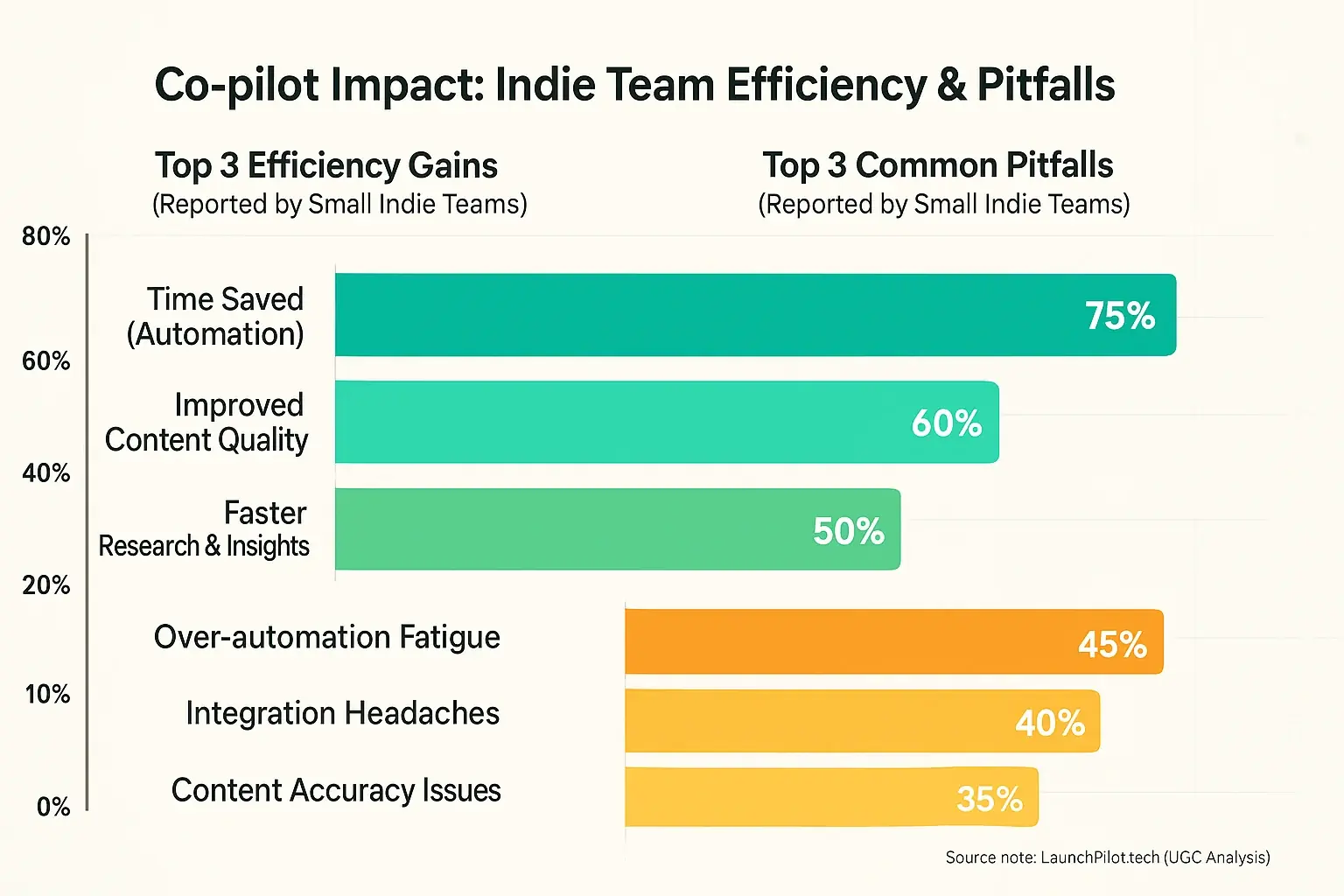
One major efficiency hack, frequently reported by indie teams, involves establishing a 'shared prompt library'. Successful user shows prompts get stored there. They are carefully categorized. This system saves precious time for everyone. It also ensures consistent, high-quality outputs from your data process co-pilots. Smart teams build this resource collaboratively.
A common pitfall, evident in numerous indie maker accounts, is 'community experiences tool fatigue'. This happens. Teams attempt automating too many tasks at once. Or they adopt too many disparate review content tools. The result? Overwhelm and diminished returns. Successful teams, based on collective wisdom, focus automation. They target only high-impact areas for their co-pilots.
Here's a crucial tip many indie creators discover through hard-won experience: regular 'consensus content check-ins' are vital. These are brief team meetings. Their purpose is to review user-generated discussions outputs. Teams then adjust strategies together. This simple habit, a lesson learned from many user experiences, catches errors early. It ensures genuine team alignment with co-pilot insights.
Indie teams consistently find that leveraging simple communication tools improves workflow. Shared documents work well. Dedicated Slack channels for feedback process-related tasks also prove effective. Using these specifically for community discussions insights boosts transparency. This practice significantly reduces friction within small teams. Everyone stays informed. Better decisions follow.