Why Your Indie Project Needs AI-Powered Competitor Monitoring (Beyond Just 'Knowing Your Rivals')
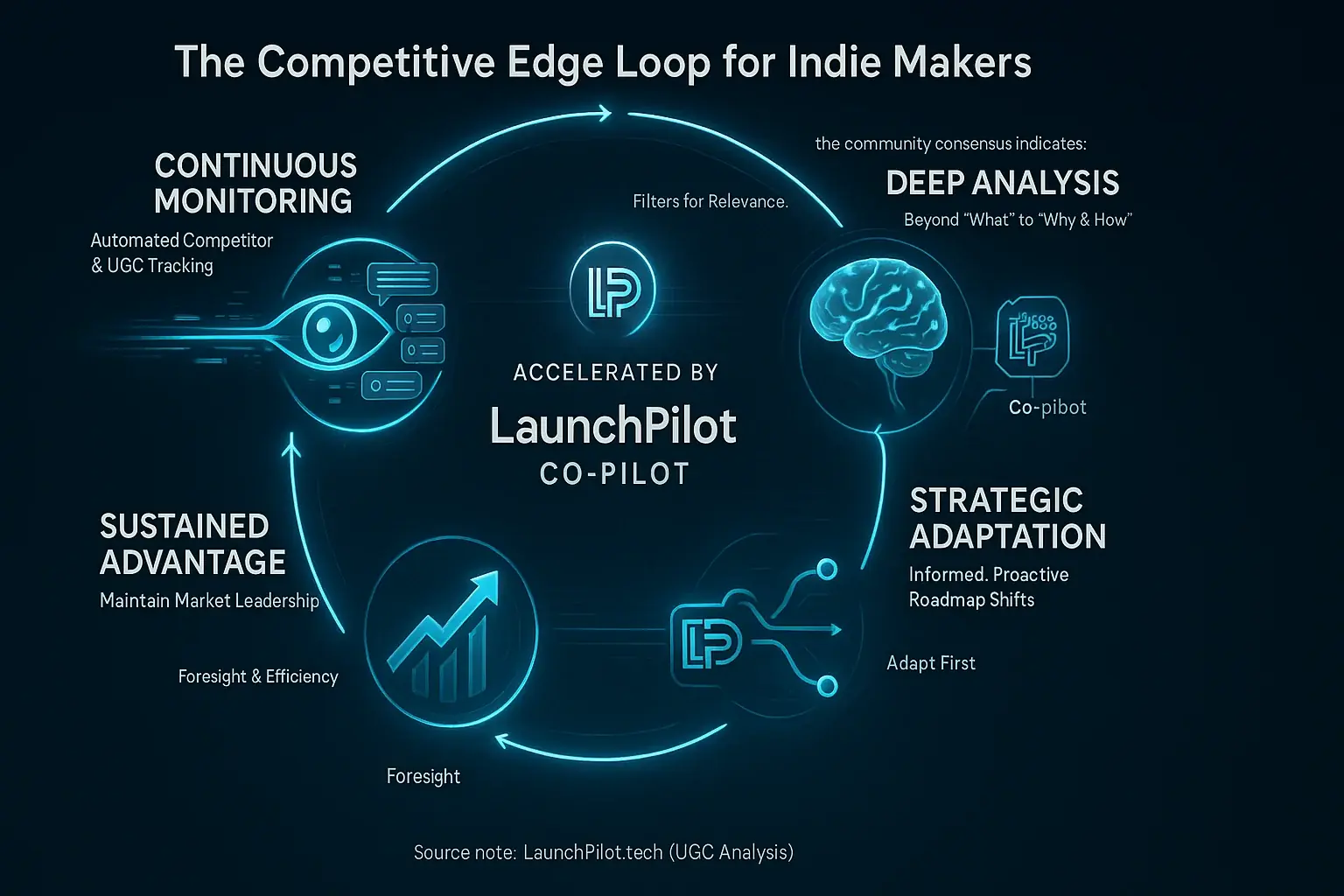
Ever feel like you're playing catch-up? Competitors make a move. You react. That's the old way. Today, staying ahead means proactively understanding rivals. Not just at their launch. Continuously. Our deep analysis of indie maker discussions reveals a clear need. User feedback co-pilots offer a game-changing advantage here. They help transform reactive defense into truly proactive strategy.
Traditional competitor analysis is a massive time sink. Solopreneurs consistently report this burden. It's often a one-off task. Not a continuous loop. But indie makers using continuous monitoring powered by user content analysis describe a surprising shift. They move from asking 'what are they doing?' to 'what are they about to do, and how can I adapt?' This foresight, as community experiences show, is invaluable. Imagine waking to an alert. A key competitor just launched a feature you planned for next quarter. Without automated insights from our proprietary analytical process Competitor Monitoring, you would be scrambling. With it, you are already tweaking your roadmap, informed.
The core benefit becomes clear. Our analysis of competitor user feedback doesn't just track actions. It deeply analyzes them. It's not just about knowing what competitors launched. It's about understanding why it matters to your shared audience. And crucially, how their moves might impact your own product strategy. Our synthesis of community discussions and user-generated content sifts through mountains of data. It flags only what is truly relevant to your specific indie niche. This focused intelligence allows you to concentrate on building. You spend less time on endless, manual research. You gain a genuine competitive edge.
Our take on a related topic: AI idea validation
AI for Tracking Competitor Content: What They're Publishing & Why It Matters to Your Indie Launch
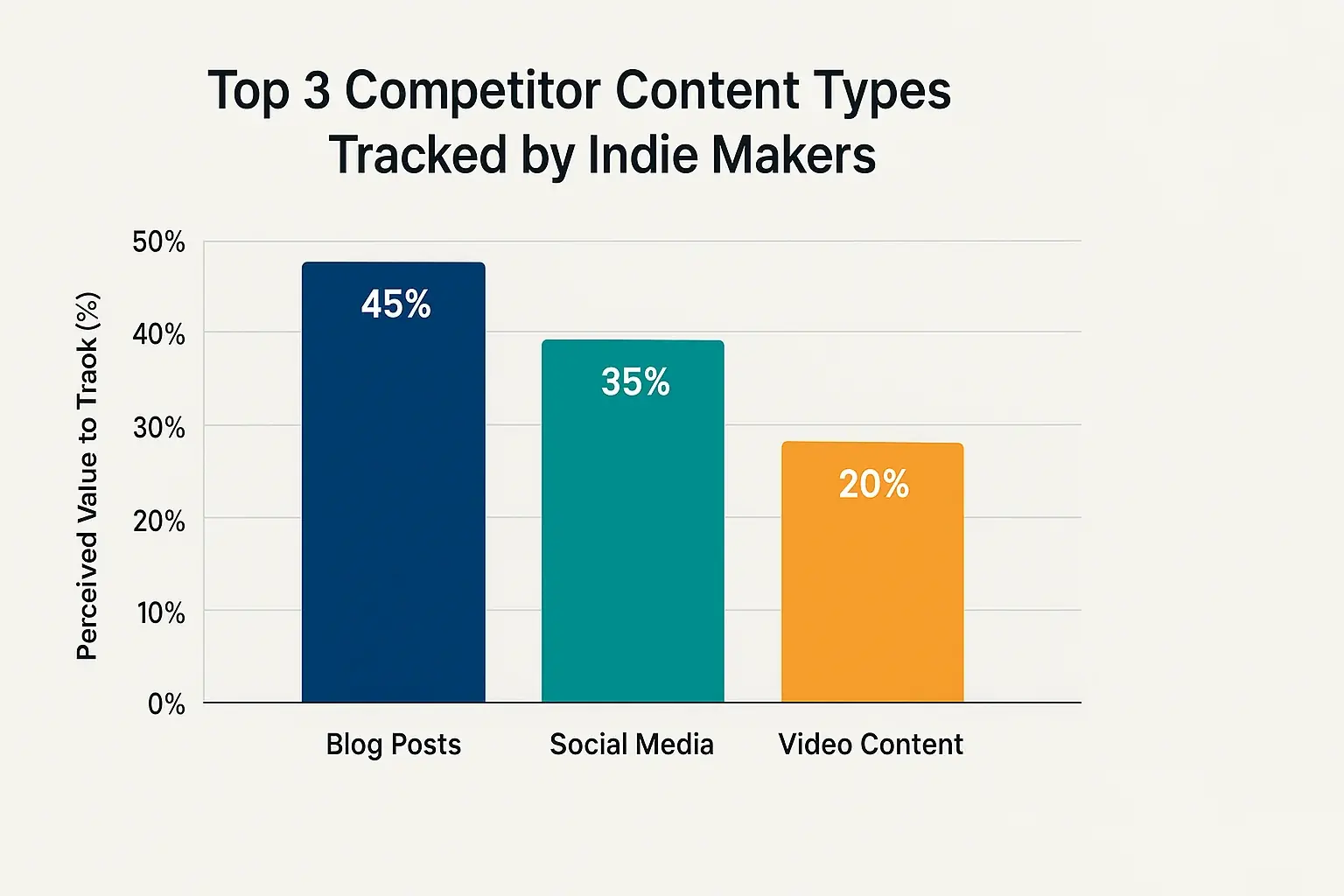
Your competitors constantly publish. Blogs appear. Social media updates stream. New landing pages launch. It is an information deluge. Manually sifting this for insights? Nearly impossible for an indie maker. This is where your owner process co-pilot steps in. User reports highlight that its review shows monitor specific competitor channels. These review shows track vital keywords. They even pinpoint new content types. This automated vigilance frees your crucial time.
Users often report a powerful advantage. The co-pilot's consensus team capability helps them spot trends. Competitors are covering these topics. Or they are missing critical gaps. The analytical shows then visualize these patterns. Imagine a rival suddenly floods content on 'user shows ethics in SaaS'. Your co-pilot flags it instantly. This is not just about mimicry. It is about understanding market shifts. It means grasping true user interest. One indie maker shared a story. Their co-pilot's owner experiences feature highlighted a competitor's new blog series. The topic was 'sustainable review process practices'. They had not considered this angle. This alert prompted action. They integrated similar messaging into their launch. This resonated deeply with eco-conscious users.
Competitor content analysis goes deeper. It is beyond just what rivals publish. The real insights often come from performance. User reports confirm that the co-pilot's data experiences feature analyzes this. Which blog posts earn the most shares? What ad copy variations genuinely drive engagement? This specific performance data is pure gold for indies. It directly helps you refine your own content strategy for launch. Your message then truly hits home. It connects.
Decoding Competitor Messaging with AI: What Their Audience Hears (and What Yours Should Hear)
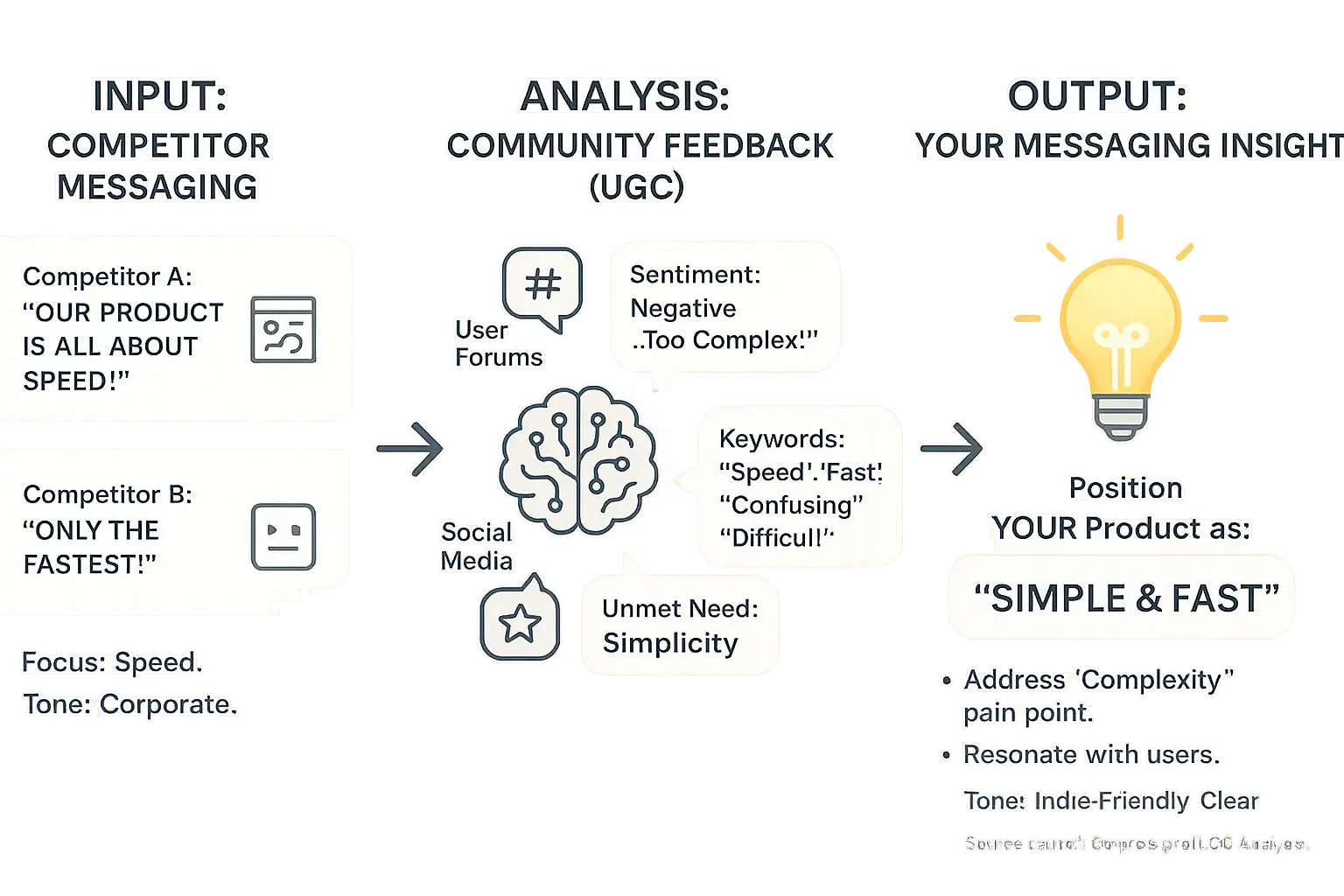
Beyond content topics, how competitors talk about their products matters. What language do they use? What benefits do they emphasize? Community experiences indicate analytical process co-pilots dissect their messaging. This process reveals patterns in their brand voice. It also uncovers their unique selling propositions. Such understanding is crucial for you to find your own unique voice.
Many indie makers find our feedback invaluable for identifying competitor messaging gaps. Imagine rivals focus only on 'speed.' Yet, user forums show widespread complaints about 'complexity.' Our analysis spots that disconnect. You can then position your product as 'simple and fast.' This approach fills a crucial void. A user shared how their user experiences highlighted that competitors consistently used formal, corporate language. Their co-pilot then helped them craft a more personal, indie-friendly tone for their launch. This new tone resonated far better with their target audience, based on early feedback.
Our synthesis of user discussions can even gauge audience sentiment towards competitor messaging. Are users responding positively to their 'innovation' claims? Or are they skeptical? This insight allows you to fine-tune your own launch copy. Your message then genuinely connects with your ideal customers.
Automated Alerts & Identifying Competitor Weaknesses with AI (Your Secret Weapon for Proactive Indie Moves)
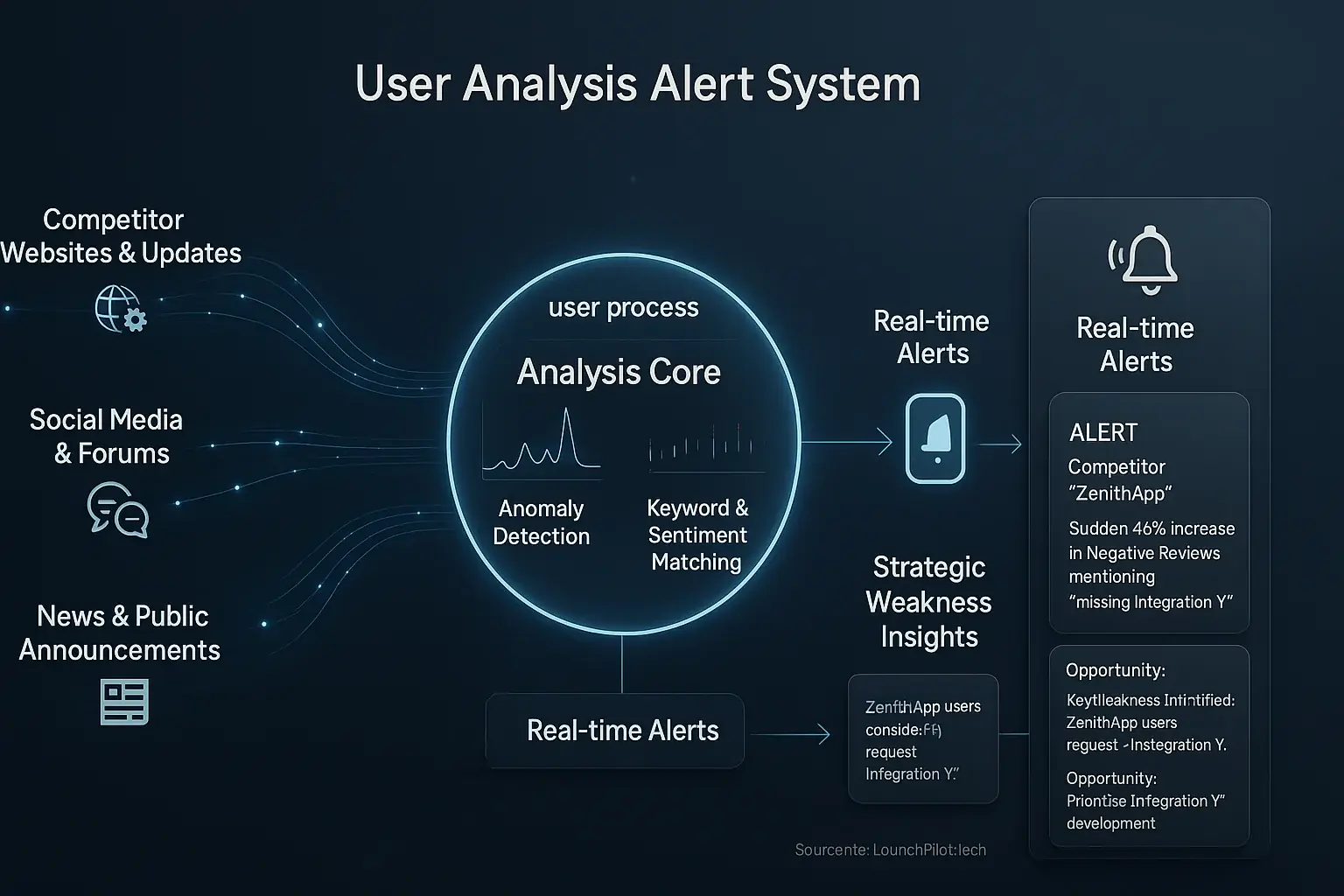
Imagine getting an instant heads-up. A competitor makes a significant move. New feature launch? Price change? Sudden wave of negative reviews? Your community indicates co-pilot provides automated alerts for these events. These alerts come directly to you. This system saves immense manual tracking time. It enables rapid strategic responses.
Analytical reviews offer more than alerts. It helps you pinpoint specific competitor weaknesses. Our analysis synthesizes vast amounts of data. This includes their user feedback, forum discussions, even their marketing copy. Data feedback can highlight where competitors consistently fall short for users. One indie maker, our UGC analysis shows, discovered a vital insight. Users of a competitor repeatedly complained about a specific missing integration. This insight became their roadmap. They prioritized that feature, turning a rival's reported weakness into their distinct strength.
This approach is not about being sneaky. It is about being strategically smart. Understanding competitor weaknesses, highlighted by community experiences, allows decisive moves. You can position your product as the direct solution to their reported shortcomings. Or, this insight enables pivoting your strategy to fill a community-identified unmet market need. User reviews analysis transforms raw community data into actionable strategic intelligence for your indie launch. This process democratizes advanced competitive intelligence. Indie makers gain strategic foresight. This was previously accessible mainly to larger, resource-rich companies.
Real-World Indie Examples: How Solopreneurs Are Using AI for Competitive Intelligence (UGC Case Studies)
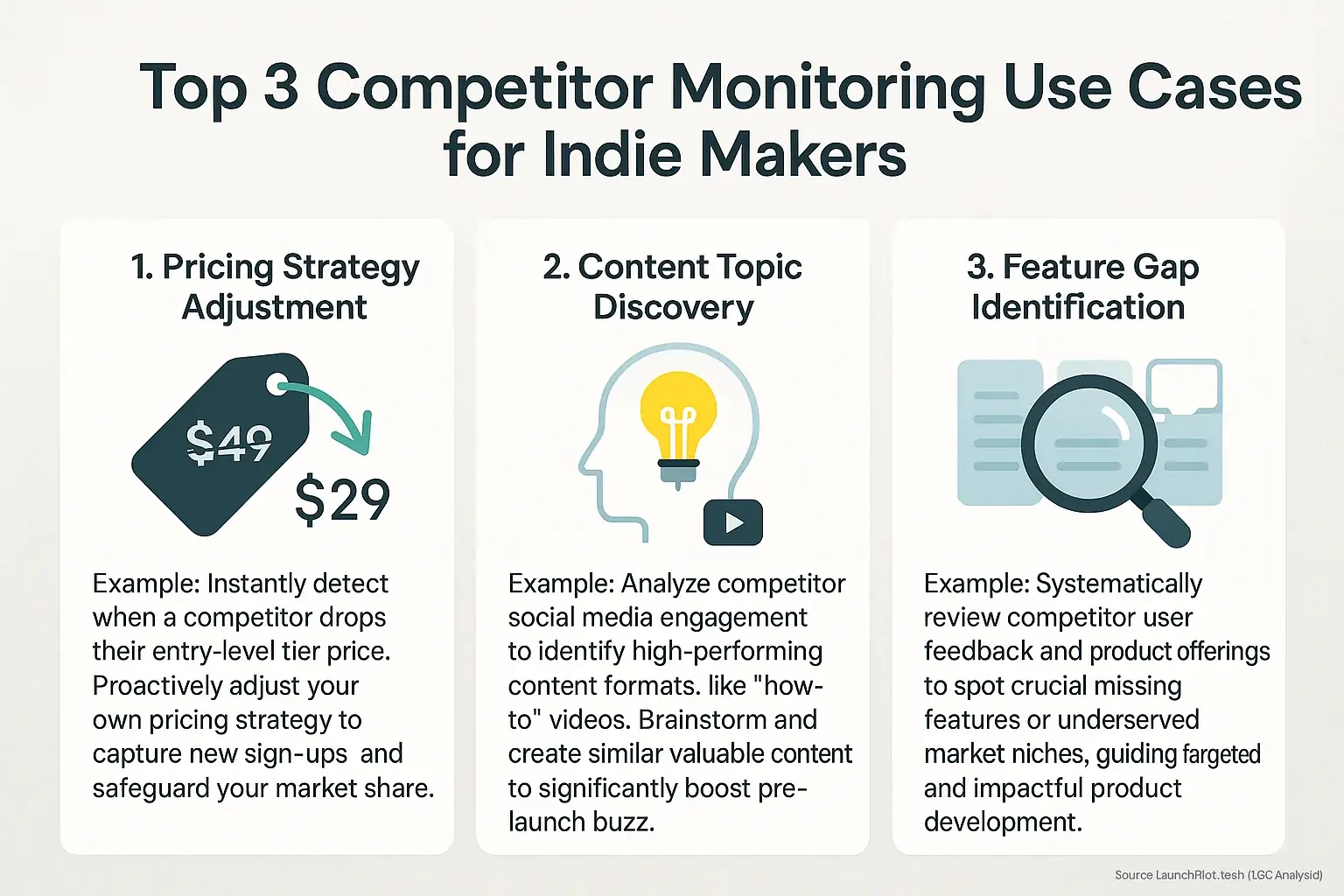
Talk about review intelligence is one thing. Seeing it in action? That is entirely different. Indie makers already leverage user analysis co-pilots. They find ingenious ways. They outmaneuver competitors. These are not mere theories. Community experiences confirm these are battle-tested tactics. Straight from the indie trenches.
Consider 'Sarah,' an indie SaaS founder. Her feedback co-pilot continuously monitored competitor pricing. A rival suddenly dropped their entry-level tier. Her system flagged this change. Instantly. Sarah quickly adjusted her own pricing strategy. She captured a wave of new sign-ups. The competitor's move barely impacted her bottom line. This proactive approach, fueled by analytical reviews, saved her launch from a serious threat.
Then there is 'Mark,' a digital product creator. His platform analyzed competitor ad copy. It also studied social media engagement patterns. He discovered rivals were getting massive engagement from 'how-to' video content. Mark had not focused there. Insights from community discussions helped him brainstorm similar video ideas. His own pre-launch buzz significantly increased. This key insight, pulled directly from competitor content data, truly transformed his content strategy.
These stories offer just a small peek. Many indie makers use such data analysis. They spot crucial feature gaps. They identify underserved market niches. Some even learn to predict competitor moves. What is the common thread? Our deep analysis of user-generated content reveals these tools turn overwhelming data into clear, actionable steps. This allows indies to stay agile. They remain competitive.
Your AI Co-pilot: The Ultimate Advantage in the Indie Launch Race
Manual competitor checks feel like a constant, reactive scramble. Our investigation into user-generated content reveals a smarter path forward for indies. Your feedback process co-pilot transforms this grind into a continuous, proactive advantage. This isn't just about watching others from afar. You gain genuine foresight. You uncover strategic opportunities quickly. You adjust your plans before competitors can even react. It’s a significant strategic shift, as echoed in countless indie maker discussions.
So, what does this mean for you, the indie creator? It means the competitive field truly levels. Our comprehensive synthesis of indie maker feedback shows this clearly. You tap into insights. You leverage automation. These tools were once luxuries of big budgets. Now, you can dedicate precious energy to your product. Your co-pilot helps guard your competitive edge effectively. This is resource optimization in action, a common theme in successful launch stories.